
“Transfer pricing is like a delicate dance between related entities, ensuring fairness and compliance while maximizing business opportunities.”
What Is Transfer Pricing and Why It Matters
Transfer pricing is a crucial aspect of multinational companies financial operations, and it refers to the price at which goods, services, and intangible assets are transferred between different entities within the same company.
However, the implementation of transfer pricing can be a complex and challenging process for many companies. With regulations and requirements constantly evolving, it’s essential for companies to understand the key factors involved in effective transfer pricing implementation.
In this blog post, we’ll provide expert tips for implementing transfer pricing and ensuring that your company is meeting its obligations while minimizing the risk of non-compliance Whether you’re new to transfer pricing or looking to improve your existing processes, this post will provide you with valuable insights and practical advice that you can use to make transfer pricing simple and effective.
How to Use Transfer Pricing Methods the Right Way
Understand the Arm’s Length Principle
Familiarize yourself with the arm’s length principle, which requires transactions between related parties to be priced as if they were conducted between unrelated parties. Gain a clear understanding of what constitutes an arm’s length price and how to apply this principle in your transfer pricing practices.
What is functional analysis in transfer pricing?
Run a Functional and Risk Analysis
Conduct a comprehensive analysis of the functions performed, assets employed, and risks assumed by each entity involved in the transaction. This functional profile helps determine the appropriate profit allocation and supports the selection of an appropriate transfer pricing method.
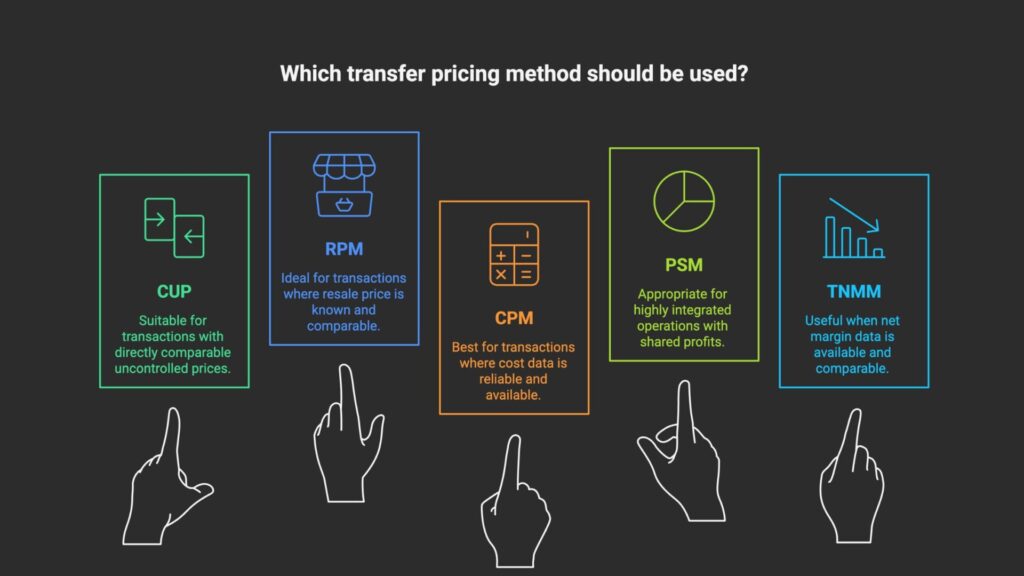
Choose the Right Transfer Pricing Method
Consider the nature of the transaction and available data to select the most suitable transfer pricing method. Common methods include:
- Comparable Uncontrolled Price (CUP)
- Resale Price Method (RPM)
- Cost-Plus Method (CPM)
- Profit Split Method (PSM)
- Transactional Net Margin Method (TNMM)
Each method has its own requirements and considerations.
Need help picking a method?
Back It Up with Benchmarking Studies
Perform independent benchmarking studies to identify comparable transactions between unrelated parties. These studies provide external evidence of the arm’s length pricing and support the reasonableness of your transfer pricing arrangements.
Learn how we do benchmarking
Keep Clear and Updated Documentation
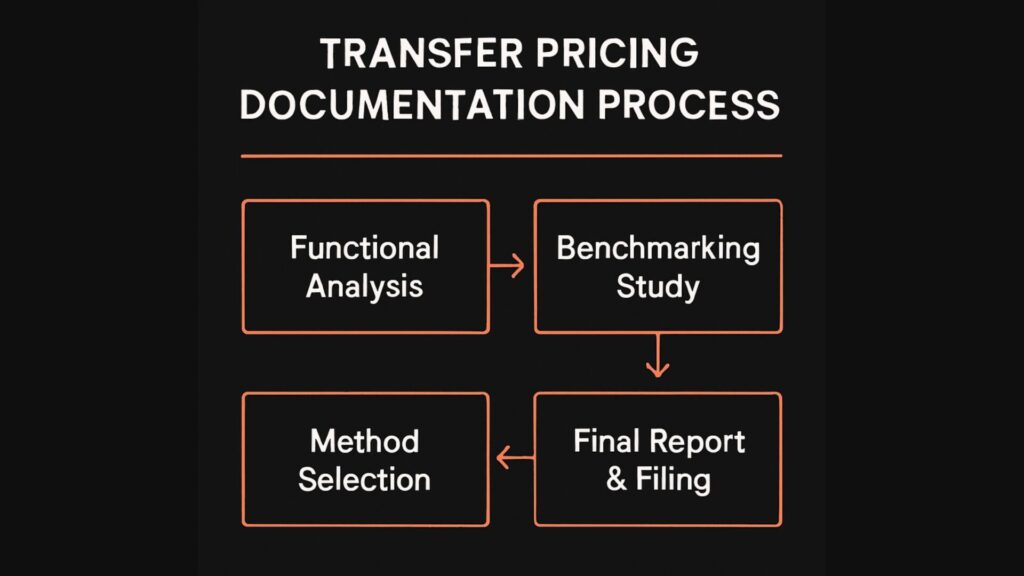
Document your transfer pricing policies, methodologies, and analyses in a clear and well-organized manner. Adequate documentation is crucial for demonstrating compliance with tax regulations and supporting your transfer pricing decisions during tax audits. Check our transfer pricing documentation guide.
Review and Update Your Policy Often
Regularly review and update your transfer pricing policies to make sure they stay aligned with changes in your business structure, the market, and tax regulations. Keep track of tax law updates and guidance from authorities.
Think About Advance Pricing Agreements (APAs)
If feasible, consider entering into APAs with tax authorities. APAs provide certainty and establish agreed-upon transfer pricing arrangements for future transactions, reducing the risk of disputes and helping with compliance. Learn APAs reduce audit risks by going through our latest article on how APAs reduce audit risks.
Work with Transfer Pricing Experts
Engage transfer pricing specialists and tax advisors to guide you through the process. They can help with analysis, documentation, and navigating jurisdictional requirements.
Need expert guidance? Our experts are just a click away
Get Everyone on the Same Page
Promote open communication and collaboration among business units, finance teams, and tax departments. This improves consistency and reduces risk across regions.
Track Global Rules and Policy Changes
Stay informed about the latest transfer pricing developments. Attend industry events, read updates, and keep learning to stay compliant.
Transfer Pricing in Action: 3 Real-World Case Studies and Examples
Case 1: Profit Split Method for Intangible Assets
Company A, a multinational technology company owns valuable intangible assets , including patents and trademarks. To allocate profits appropriately and comply with transfer pricing regulations, Company A conducts a detailed functional and risk analysis of its entities involved in the development, maintenance, and exploitation of these intangible assets.
Based on the analysis, Company A determines that the entity responsible for the majority of the research and development activities should be entitled to a higher share of the profits generated from the intangible assets. They implement a transfer pricing method called the profit split method to ensure a fair allocation of profits based on the value contributed by each entity.
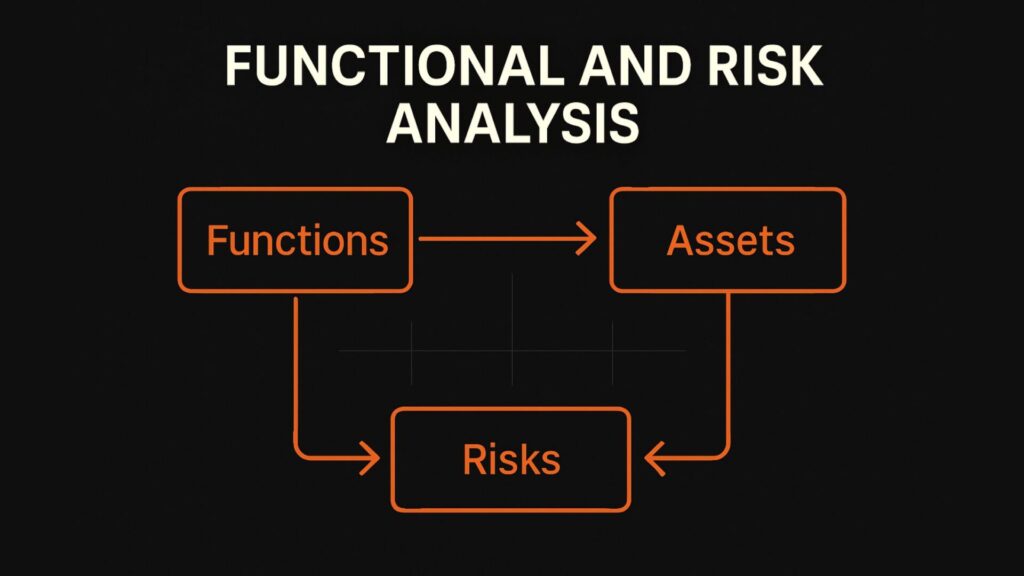
This case study illustrates the importance of conducting a comprehensive functional and risk analysis to accurately allocate profits related to valuable intangible assets, promoting a fair and compliant transfer pricing structure.
Case 2: TNMM in Manufacturing and Distribution
Company B operates globally and has manufacturing entities in low-cost jurisdictions and distribution entities in high-demand markets. To ensure that the profits are properly allocated between these entities, Company B implements the transactional net margin method (TNMM) as the transfer pricing method.
They perform benchmarking studies to identify comparable transactions in the market, considering factors such as manufacturing costs, market demand, and the functions performed by each entity. Through TNMM, Company B determines an appropriate profit margin for the manufacturing and distribution entities based on the industry benchmarks.
This case study showcases the use of a transfer pricing method that considers the profitability of each entity in relation to its functions and risks enabling a reasonable allocation of profits in a global manufacturing and distribution setup.
Case 3: E-commerce Compliance Across Borders
Company C is an e-commerce compliance giant operating in multiple countries. They face the challenge of ensuring transfer pricing compliance with transfer pricing regulations of international tax law, tax documentation standards in various jurisdictions where they have subsidiaries and conduct cross-border transactions.
To address this challenge, Company C takes a proactive approach to transfer pricing compliance. They engage transfer pricing services who analyze their business operations, intercompany transactions, and transfer pricing policies in each jurisdiction. They ensure that the transfer pricing policies are consistent with local regulations and adhere to the arm’s length principle.
Company C also implements a centralized documentation system, enabling efficient and comprehensive record-keeping of their transfer pricing policies, methodologies, and supporting documentation across all jurisdictions.
This case study emphasizes the significance of a proactive compliance approach, tailored transfer pricing policies, and robust documentation practices to navigate the complexities of transfer pricing in the e-commerce industry.
Final Thoughts: Make Transfer Pricing Work for You
Transfer pricing doesn’t have to be overwhelming. The right approach makes it easier and more effective.
Understand your operations, choose the right transfer pricing method, build strong documentation, and run solid benchmarking. Stay updated and adjust when needed.
Working with professionals helps reduce risk and stay compliant. With the right strategy in place, transfer pricing becomes a smart tool to manage profit allocation across global operations.
Stay Compliant. Avoid Risk.
FAQs
1. What is transfer pricing in simple words?
Transfer pricing is how companies set prices for goods, services, or intangibles like patents when they move between different parts of the same company across countries. It helps decide how much profit each part of the business should report, which affects how much tax they pay in each place.
2. What are the main transfer pricing methods?
The five common transfer pricing methods are:
- Comparable Uncontrolled Price (CUP)
- Resale Price Method (RPM)
- Cost-Plus Method (CPM)
- Profit Split Method (PSM)
- Transactional Net Margin Method (TNMM)
Each method follows the arm’s length principle and works best for different types of transactions.
3. How does the arm’s length principle work?
The arm’s length principle means related businesses must deal with each other like they would with outsiders. So, if two parts of the same company trade, they must charge each other fair market prices just like two independent companies would.
4. Why is transfer pricing important for compliance?
Getting transfer pricing compliance right helps avoid tax trouble. Governments want to make sure companies aren’t shifting profits to low-tax countries unfairly. Having the right documentation, methods, and support helps businesses stay on the safe side during tax audits.
5. What’s a benchmarking study in transfer pricing?
A benchmarking study compares your company’s pricing to similar deals between unrelated companies. It’s used to prove your prices are fair and follow the arm’s length rule. These studies back up your transfer pricing documentation during audits.
6. What is CPM in transfer pricing?
CPM stands for Cost-Plus Method. It’s a common method where a company adds a markup to its production or service costs to set the transfer price. It works best when you can track the cost clearly and compare the markup to what similar companies charge.
7. What is FTP in transfer pricing?
In transfer pricing, FTP usually gets mixed up with the term TP. In finance, FTP means Fund Transfer Pricing, mostly used by banks to price internal funding. But in transfer pricing, if you’re seeing FTP, it’s likely just referring to transfer pricing itself, how profits are split fairly between entities in different countries based on the value they create.